Bath textiles · Materials & care
Inside the Weave: Texture and Care in Bath Mats & Rugs
A bath mat does more than soften the first step out of the shower. Its weave, fiber, weight, and finishing details shape how it feels underfoot, responds to moisture, and fits into a household’s laundry routine. Understanding those differences makes it easier to choose a mat or rug that feels comfortable and stays practical day after day.
Published October 27, 2026
The bathroom is full of small rituals, and few are as familiar as stepping from a bath or shower onto a soft, dry surface. That moment can feel inviting or merely functional, depending on what lies underfoot. But the character of a bath mat is not just a matter of plushness or color. The structure of its textile—how the yarns cross, loop, or rise from the ground—helps determine its texture, absorbency, drying behavior, and care needs.
Bath mats and bath rugs are often discussed as though the terms describe completely different objects. In practice, naming can vary by maker and household. Both may be used to create a comfortable landing spot near a tub, shower, or sink. What matters most is the construction: a raised pile behaves differently from a flat weave, and a tightly finished border may hold up differently from a loose fringe. Fiber content and laundering instructions matter just as much as the first impression.
A thoughtful choice balances comfort with the realities of a bathroom. How many people use the room? Is the mat washed frequently? Does it have time to dry between showers? A surface that feels wonderfully thick in a showroom may not be the easiest option for a compact bathroom with limited ventilation. The best fit is one that works not only on day one, but through ordinary use and repeated cleaning.
Weave is the first clue to how a mat will feel
A textile’s weave is the arrangement of its yarns. In a bath mat, that construction influences the surface your feet meet and the paths available for water and air to move through the fabric. It can also affect flexibility, thickness, and how the textile lies on the floor. Two mats made from the same fiber may feel quite different if one has a flat, open structure and the other has dense loops or a pronounced raised texture.
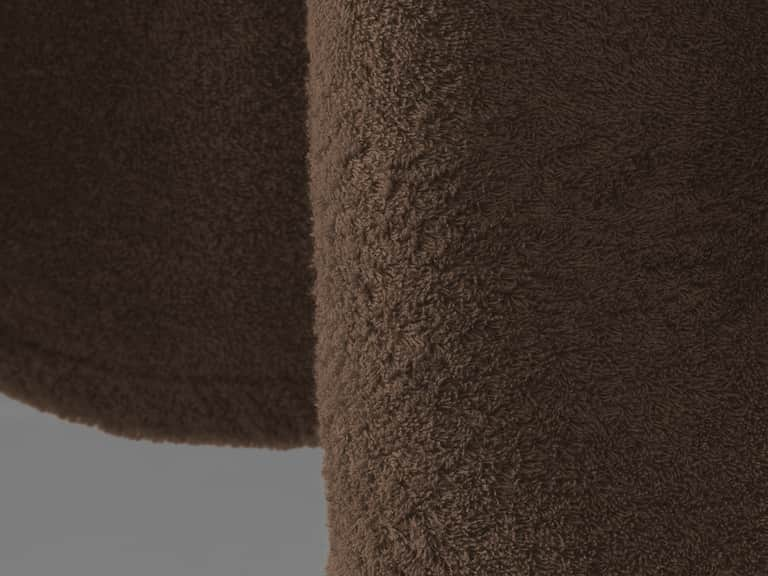
Terry construction uses loops that create a soft, absorbent surface. Those loops increase the area of yarn available to take up moisture, while giving the textile a familiar, cushioned feel. A higher, denser pile may feel especially plush, but it can also hold more water within the fabric and take longer to dry, depending on its weight, fiber, and the conditions in the room.
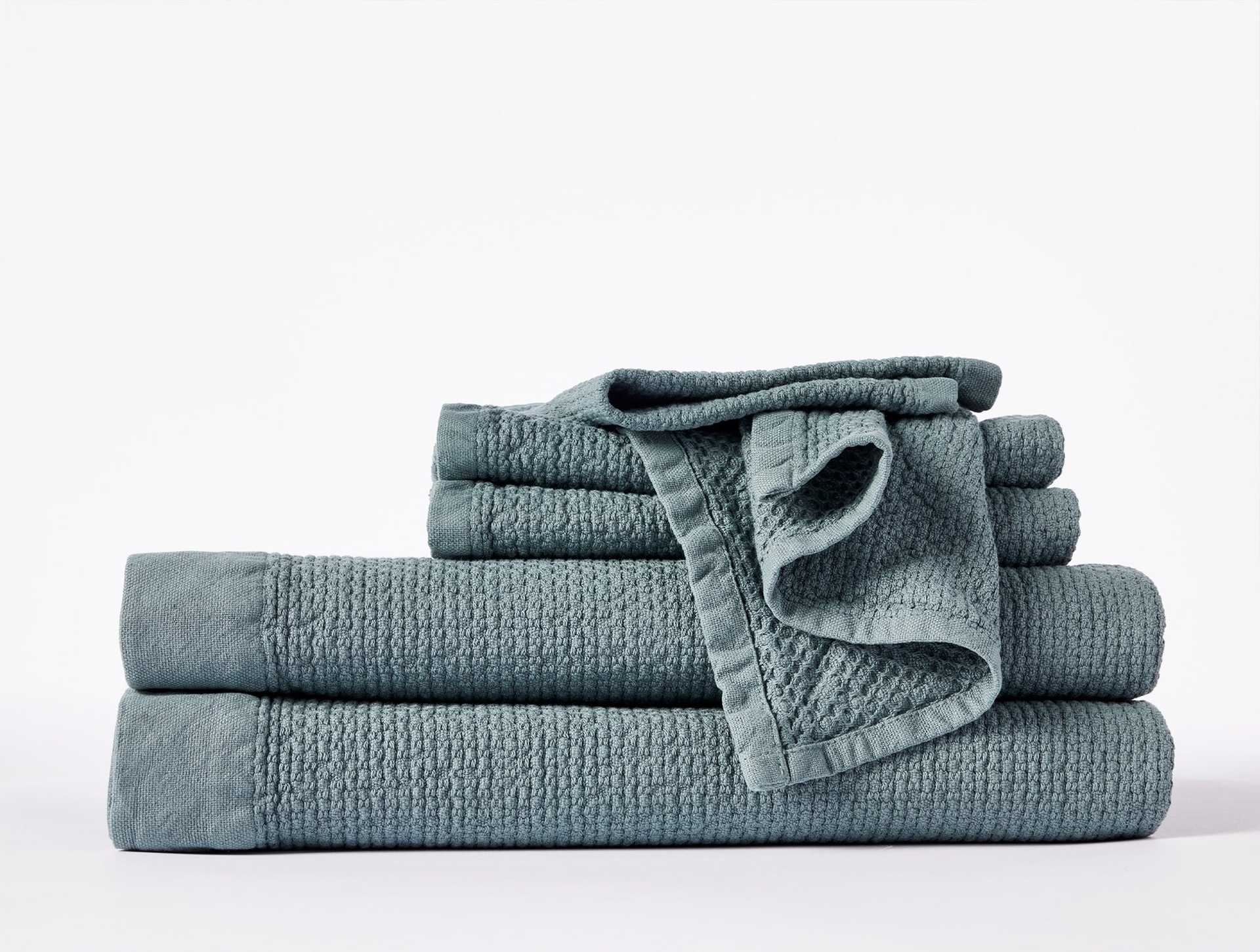
Flat and low-profile weaves offer a different experience. They tend to feel less pillowy, but their lighter construction may be convenient where quick handling, easy storage, or more frequent washing is a priority. A textured weave can create interest and a little underfoot character without relying on a deep pile. The exact result depends on the yarn, weave density, and finishing rather than on the label alone.
A pebbled, ribbed, or channelled surface adds another layer of texture. These details can give a mat a more defined feel and appearance, but they should be considered alongside practical questions: Can the surface be washed without difficulty? Are there pronounced loops that could snag? Will the mat lie evenly after laundering? Texture is not simply decoration; it is part of the textile’s everyday behavior.
Plush pile or textured weave? Start with your routine
A plush mat is an appealing choice when comfort is the priority. The taller surface can feel soft and cushioning, particularly in a bathroom used for unhurried morning or evening routines. It may also provide a substantial, cozy look beside a tub. The trade-off is that a thicker textile can be heavier to launder and may need more time and airflow to dry thoroughly.
A more compact weave may suit households that want a simpler, lighter option. It can be easier to lift, hang, and fit into a regular laundry load. This does not mean that every flat or low-profile mat dries instantly; actual drying depends on fiber, thickness, room humidity, ventilation, and how the mat is arranged after use. Still, a less bulky construction can make handling more straightforward.
Consider the pattern of use, not just the first touch. A guest bathroom used occasionally may call for different priorities from a family bathroom where several people shower each day. In a busy room, a mat that can be washed and dried without fuss may be more useful than one selected solely for maximum loft. For a smaller room, the visual and physical scale of the mat matters too: a thick, generous rug may feel luxurious, but it needs adequate floor space and a place to dry between uses.
Fiber content shapes absorbency and care
Cotton is widely used in bath textiles because it is soft, familiar, and able to absorb moisture. Its performance still varies. Yarn length and quality, the way the yarn is spun, fabric density, and the weave all contribute to the finished feel. “Cotton” alone does not tell you whether a mat will be light, plush, quick to dry, or especially durable.
Long-staple cotton refers to cotton fibers that are longer than average. Longer fibers can be spun into smoother yarns, though the finished product’s performance also depends on how it is constructed and treated. Combed cotton has been processed to remove shorter fibers and impurities before spinning. These terms offer useful context, but they are not substitutes for checking the mat’s care directions and construction.
Linen and cotton-linen textiles can feel different from conventional cotton terry. Linen is known for a crisp, textured hand that can soften with use, while the weave and weight determine how it behaves as a bath textile. A linen surface may not have the same deep, cushion-like pile as terry. That difference is a matter of preference and intended use, rather than a simple ranking of one fiber as universally better.
Fiber content also affects how a mat should be washed. A care label may specify water temperature, cycle, detergent, and drying method to help preserve the material and its finish. When a mat combines several fibers or includes decorative elements, follow the instructions for the complete textile rather than assuming that the main fiber tells the whole story.
Moisture management is about more than absorbency
Absorbency is an important quality, but it is only one part of moisture management. A mat has to take up water from feet and then release it into the surrounding air. A thick textile may absorb plenty while also retaining moisture for longer. A lighter weave may feel less padded but be easier to spread out and air. The balance between these qualities matters most in a room where the mat is used repeatedly throughout the day.
Ventilation makes a noticeable difference. After use, hang or spread the mat where air can reach both its surface and underside, when its construction and the space allow. Leaving a wet textile bunched on a floor can slow drying. If a mat remains damp for long periods or develops an unpleasant odor, laundering and drying habits may need attention; simply masking the smell does not address the underlying moisture.
It is also useful to distinguish a bath textile from a floor safety device. Unless a product is specifically designed and described as having a secure, slip-resistant backing, do not assume that any fabric mat will stay firmly in place on every surface. Check the manufacturer’s guidance, keep the floor beneath it dry, and make sure the mat lies flat. This practical check belongs alongside questions about softness and absorbency.
Borders, hems, and other construction details
The edges of a bath mat deserve a closer look. A hem encloses or secures the raw edge of a textile, helping it maintain a neat outline. Borders may be woven, stitched, or added as a contrasting finish. Rounded corners, reinforced seams, and carefully finished edges can contribute to a polished appearance and help the mat hold its shape through routine handling.
A border is not automatically a guarantee of durability. Its quality depends on the materials and workmanship, and on whether the care routine suits the item. Before washing, check for fringe, decorative stitching, or embellishments that could catch on other textiles. If a care label recommends washing separately or using a gentle cycle, follow that guidance rather than treating the mat like a load of everyday towels.
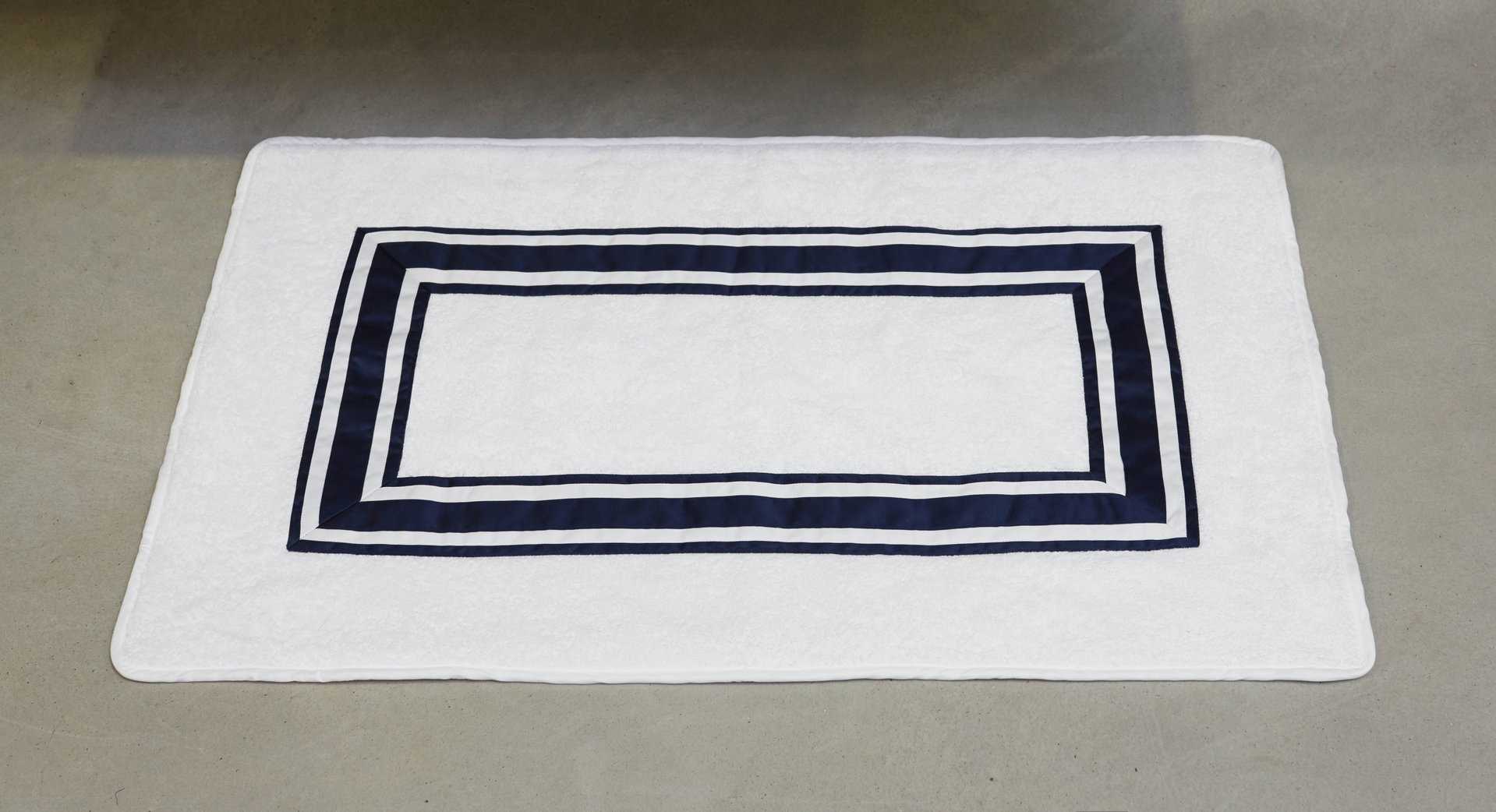
The Tivoli Luxury Bath Mat illustrates how finishing details can be part of a textile’s character. It is made from long-staple combed cotton and features a handmade border with rounded corners and colored accents along one short side. Those details are worth considering not as a promise of any particular performance, but as useful information about material and finish when comparing bath mats.
Laundry care that respects the weave
A reliable care routine begins with the label. Instructions vary, so there is no single washing method that suits every bath mat. Some cotton textiles call for a cool, gentle wash and low-temperature tumble drying; other materials or finishes may require different handling. The care label is the best guide for the specific item.
As a general habit, avoid overcrowding the washer. A mat needs room to move through the water and rinse properly, and an overloaded drum can place unnecessary strain on seams and edges. Wash like colors together, particularly when a textile is new or richly dyed. Use an appropriate amount of detergent: excess residue can remain in the fibers and may affect the feel or rinsing of the fabric.
Skip bleach or fabric softener unless the care instructions explicitly allow them. Bleach can damage fibers or alter color, while softener buildup can change how absorbent some textiles feel. If a mat seems less absorbent after washing, review the detergent amount and rinse thoroughly rather than immediately adding a softening product.
Drying deserves equal care. If tumble drying is permitted, use the temperature stated on the label and remove the mat when dry. If line drying is recommended, hang it so air can circulate rather than folding it over a narrow support while damp. Make sure the underside is dry too before returning it to the bathroom floor. A clean textile that is put away or laid down before it has dried fully can quickly lose that fresh, comfortable feeling.
Over time, inspect the edges and surface for loose threads, pulled loops, or a change in shape. Addressing a small snag carefully is often better than tugging at it, which can pull more yarn from the weave. When wear becomes substantial, or a mat no longer lies flat, it may be time to retire it from bathroom-floor use.
A practical checklist before choosing
A few focused questions can make comparisons clearer. Rather than relying on a broad claim such as “soft” or “absorbent,” look for details that connect to how the mat will be used and cared for.
- What is the surface like? Compare plush loops, low pile, and textured or flat weaves to find a feel you enjoy.
- What is the fiber content? Check whether the mat is cotton, linen, a blend, or another material, and read any relevant construction notes.
- How will it dry? Consider the textile’s thickness and whether your bathroom has enough ventilation and space to air it between uses.
- Are the edges well finished? Look for clear information about hems, borders, seams, or fringe that may affect laundering.
- Does the care routine suit your household? Make sure the washing and drying instructions fit your available time and equipment.
- Will it stay safely in place? Confirm the product’s guidance about its backing and use it only on a clean, dry floor.
These questions are useful whether you prefer a simple everyday mat or a more decorative bath rug. They shift the decision from a quick judgment based on appearance to a more complete picture of feel, function, and maintenance.
Matching comfort with everyday reality
A bath mat may be a modest part of a bathroom, but it interacts with the room’s most practical routines. It encounters water, bare feet, frequent laundering, and limited drying space. Its texture can set the tone for the room, while its construction determines whether it is easy to wash and care for. Those small details are why reading beyond the color and dimensions is worthwhile.
There is no single ideal weave for every home. A plush pile may be the right choice for someone who values a cushioned step and has the time and space to dry it well. A lighter, textured weave may suit a household that prioritizes easier handling. Cotton offers familiar softness and absorbency; other fibers can bring distinct textures and care considerations. Borders and hems add character, but the whole mat still needs to work with the household’s laundry habits.
The most satisfying choice is the one that feels good underfoot without making upkeep a chore. Pay attention to weave, fiber, and finishing; give the mat room to dry; and let its care instructions guide the wash. With that simple understanding, a bath mat can be both a comfortable daily essential and a textile that holds up to the rhythm of the room.
Frequently asked questions
Are bath mats and bath rugs the same thing?
The terms are often used interchangeably, and usage can vary among makers and households. Instead of relying on the name, compare the dimensions, weave, fiber, thickness, finish, and care instructions to understand how a particular textile is intended to be used.
Does a thicker bath mat absorb more water?
Thickness alone does not determine absorbency. Fiber, yarn, pile, and overall construction all matter. A dense or plush mat may take up moisture well, but it can also retain it longer and require more time to dry.
How often should a bath mat be washed?
There is no universal schedule because use, household size, ventilation, and drying time vary. Wash the mat regularly according to its care label, and do so sooner if it becomes visibly soiled, stays damp, or develops an odor. Allow it to dry fully between uses whenever possible.
Can any bath mat go in a tumble dryer?
No. Drying instructions depend on the fiber, weave, backing, and finish. Check the care label before using a dryer, and follow its stated temperature and method. Some mats may need line drying or another gentler approach.